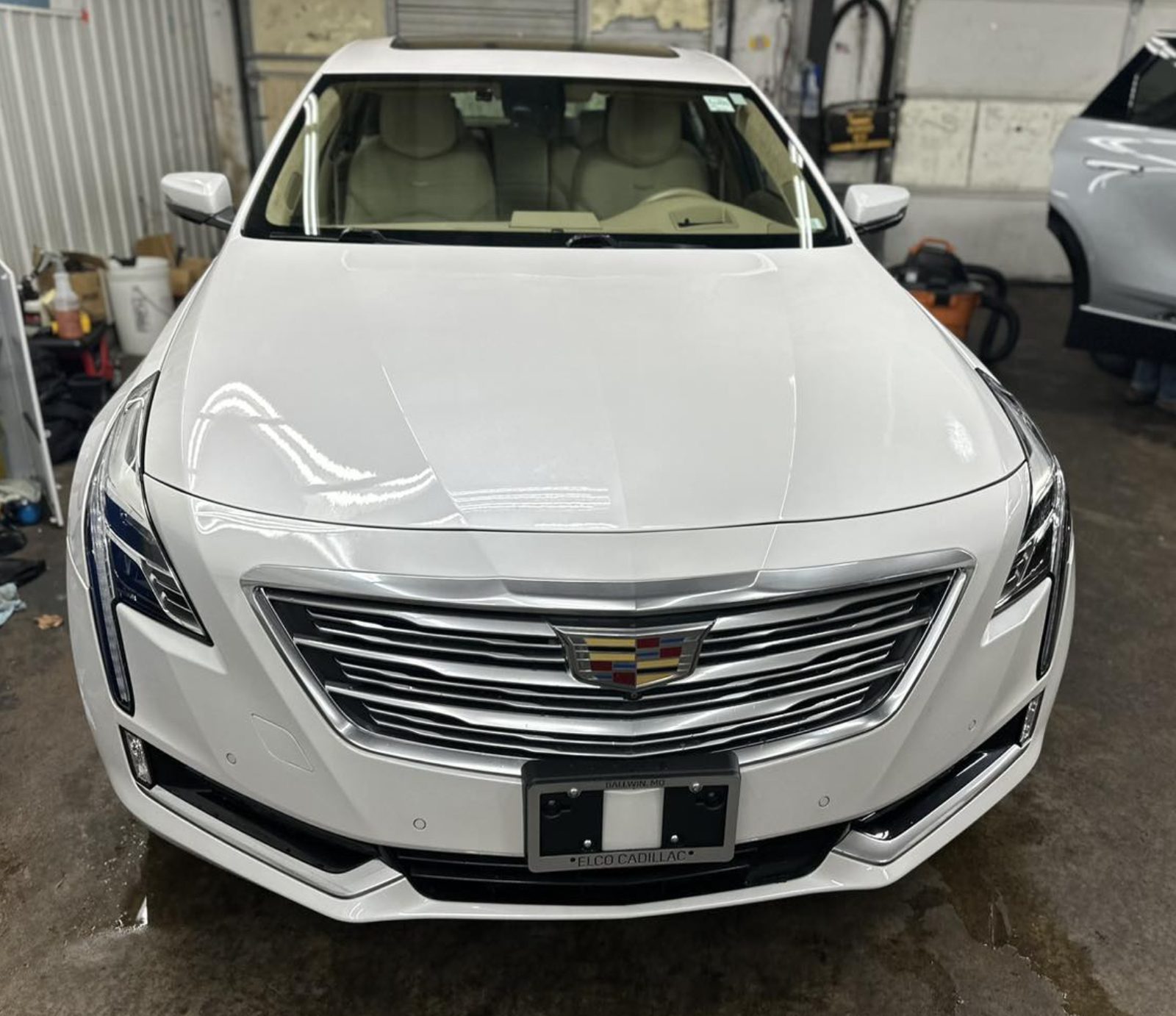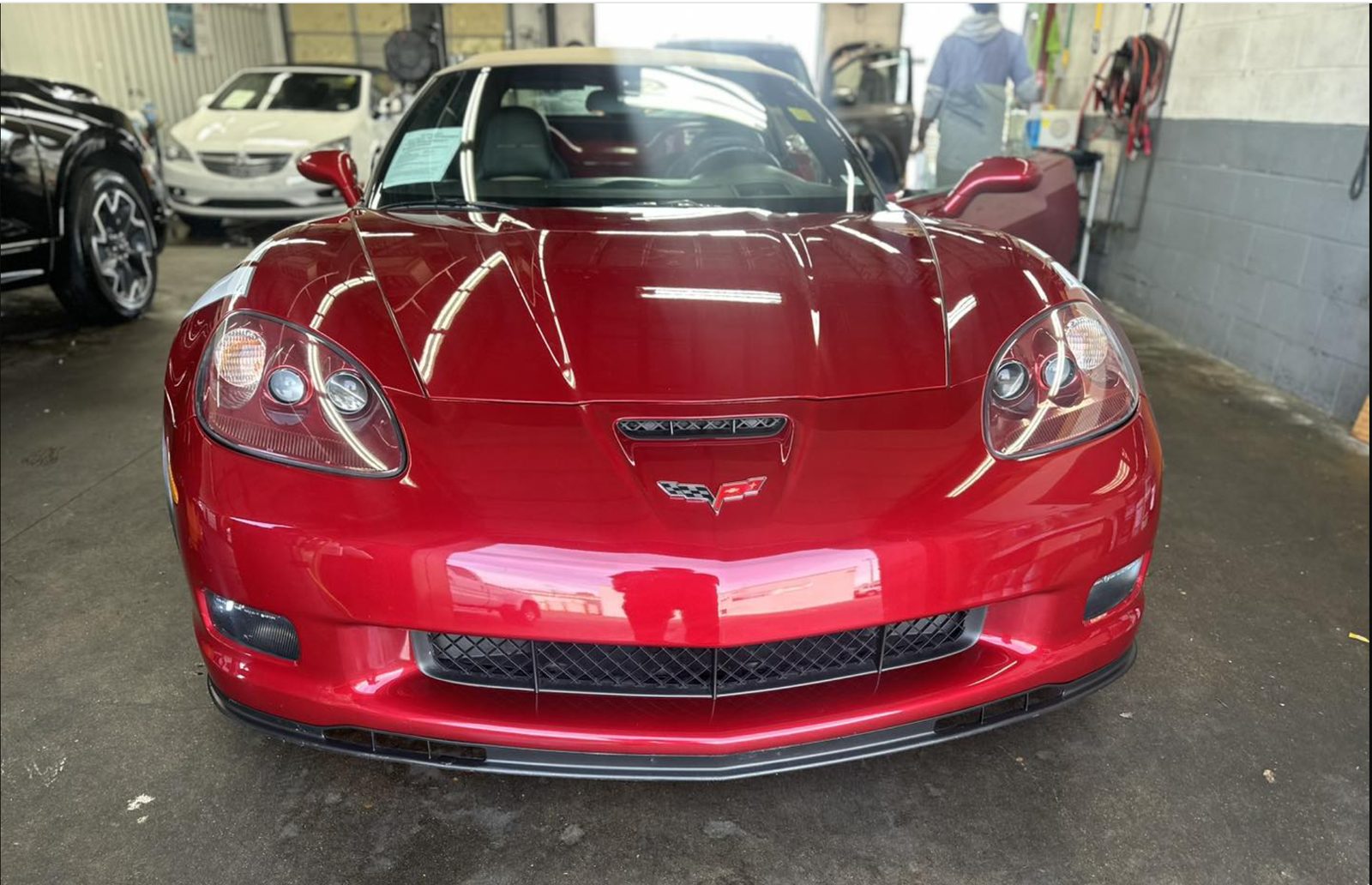
Swirl marks are fine circular scratches in the clear coat, usually caused by automatic car washes, dirty towels, or dry wiping. In direct sun they look like spider webs around a light source. Light scratches from keys, branches, or fingernails around door handles fall into the same family. They dull the paint because they scatter light instead of reflecting it.
Paint correction removes a very thin layer of clear coat with a machine polisher and abrasive polish until the surface is level again. The result is sharper reflections and richer color. It is common before selling a car, after buying a used one, or before applying a ceramic coating that will lock in whatever finish is underneath.
Not every vehicle needs a heavy correction. Some paint only needs a single polishing step to brighten it up; other finishes need a cutting step followed by refining. The right answer comes from looking at the paint under good light, not from a package name.
What the service generally includes
- Thorough wash and decontamination. The paint must be completely clean and smooth before any polishing begins.
- Inspection under strong light. Defects are mapped panel by panel so effort goes where it is needed.
- Taping off trim and edges. Plastic trim, badges, and sharp body lines are protected from the polisher.
- Compounding where needed. A more aggressive step levels deeper swirls and scratches.
- Refining polish. A finer step removes haze and brings the gloss up.
- Protection afterward. A sealant, wax, or coating protects the corrected finish.
What changes the scope and time
The amount of correction depends on how deep the defects are and how much clear coat the paint has to spare. Factory clear coat is thin, so a careful detailer removes only what is needed. Scratches that catch a fingernail usually go through the clear coat and cannot be polished out completely.
Paint type matters too. Some colors and brands have soft clear coat that marks easily; others are hard and slow to correct. Previously repainted panels may behave differently from factory paint. The Google listing description also says the business paints cars and does body work, so if a scratch is too deep to polish, ask whether a paint repair is a better option.
How to prepare
Wash the car before the inspection if possible so the defects can be seen clearly. Point out any panels that have been repainted, any chips you know about, and any area you care about most, such as the hood or driver door.
Plan for the vehicle to stay out of rain and dust for the rest of the day if a protective layer is being applied afterward.
After the appointment
Corrected paint stays sharp longer when it is washed by hand with clean mitts and dried with soft towels. Avoid automatic brush washes, which are the most common source of new swirl marks.